Organ donor project uses artistic ways to reach new audiences

Liberty842’s Tilley Harris is directing the inexchange project, a photography, film and social media project about organ donation. Tilley is part of Voist who are conducting the project, a small creative collective that uses photos, video and journalism to deliver ideas, information and opinions.

The project’s primary aim is to change attitudes surrounding organ donation in Black and Minority Ethnic (BME) communities through a street based exhibition and online interactive campaign.

According to the UK Transplant website, approximately 8,000 people are waiting for organ transplants in the UK – with a disproportionately greater number from minority ethnic backgrounds.

The success of organ transplantation depends heavily on blood type; with very few type B donors (the predominant blood type of Asian & Afro Caribbean groups) on the register, organ donation within ethnic communities is becoming a serious public health issue. As the need for organs amongst its members increases, the racial mix of donors needs to match the demand more closely.

Working alongside Gurch Randhawa, Professor of Diversity in Public Health & Director of the Institute for Health Research at the University of Bedfordshire, inexchange hopes to encourage more people from BME groups to sign up to the organ donation register.

Inexchange’s video promoting their project to increase organ donation in BME groups

inexchange aims to deliver its mission statement: to inform, connect and inspire through a participatory exhibition from which workshops, events and talks will be held. A collection of photographic essays with accompanying text will offer insight into what life is like waiting for an organ and how life changing it is to receive one. This will aim to show communities how organ failure and donation can relate to everyone, as well sharing these stories on the inexchange website.

inexchange aims to take its street exhibition to several locations in and around the capital, visiting areas where there are a higher proportion of BME communities including Hackney, Brixton and Elephant & Castle. It further hopes to be able to tie the exhibition into cultural and religious events including Black History Month, Eid and Diwali.

Liberty842 is working with inexchange to develop a social media strategy for the project. This includes rolling out an online campaign, featuring a website with a blog about organ donation, relevant stories and collected photographs. Social online networking (e.g. Facebook, YouTube) will play a big part in helping to generate wider interest and support.

Daisy says: “We were really inspired by The Great Schlep campaign in the US that aimed to help get Obama elected. It encouraged young Jewish people to visit their grandparents in Florida – a key state – and persuade them to vote for Obama. They were given all the facts, tools and arguments they needed.

“The Inexchange project aims to use social networks to encourage discussion and debate about organ donation. This campaign won’t be on the scale of the Great Schlep, but if we can persuade more people to sign up to the register, and pass on their experiences, we’ll have succeeded.”

By Emma Rink

For further information:

http://inexchangeproject.co.uk/

Like Inexchange on Facebook

Follow @inexchangeUK on Twitter

http://www.thegreatschlep.com

Teen fans use twitter to mobilise online – and offline

“Then I saw his face… now I’m a Belieber”. If The Sun’s news story, telling how 300 girls broke into ITV London’s studios to meet their idol Justin Bieber, is anything to go by then it really is that easy.

The teen throb was recording Alan Carr’s Summertime Specstacular when the diehard fans stormed past security barriers – plus our very own Daisy and Tayler.

“We suddenly saw loads of girls screaming and running up the driveway at the back of ITV studios! It was scary!” reports a bewildered Tayler. Luckily, managers closed the main studio doors before true Fandemonium – and indeed Alan’s glasses – broke loose.

If you’re questioning how a lustful group of tweenagers synchronized such an orchestrated affair, social media may provide an answer. One fan’s comment on the article reveals all:

“Us fan girls revolve our lives around Justin Drew Bieber, we may have school but everything…..EVERYTHING is about him. We have twitters dedicated to him where we spend hours tweeting him to follow us. We have tumblrs. .. thinking about someone for years then finally getting the chance to meet them is crazy! There’s nothing to describe it it’s like the best feeling in the world.”

We are doing a lot of research around fan networks at the moment – how and why followers communicate with each other over their hero and the real life outcomes of these online (and sometimes quite finely tuned) operations.

Using Twitter and Tumblr as a tool to connect with your idol can effectively bring fans together from all corners of the globe to create an unstoppable army of devotees, narrowly missed by Liberty842 during their firsthand experience of the extreme end of Beiber Fever. With Twitter pages now dedicated to meeting your icon, it surely won’t be long before a new horde of Beliebers are out in force.

One Direction fan tweet

Twitter also allowed us to speak directly to One Direction fans planning to come down to the Alan Carr show for the band’s first ever chat show interview. Many have stayed Chatty Man fans ever since, proving Twitter as an invaluable tool to gain and maintain new audiences.

We spotted on Twitter a more primal example of a One Direction fan’s desperate attempt to spot the teen heart throbs outside the ITV studios (note: caps and swear words mean business):

“ANYONE THAT IS AT ALAN CARR TODAY AND HAS A BLACK BERRY, I BEG OF YOU. FUCKING TAKE A PICTURE AND TWEET IT. merci.”

A nice story I came across told how almost 4,000 people used Facebook, Youtube and Twitter help a young girl suffering from cancer to meet her idol, Taylor Swift.

After Lexi Barnett was denied by record executives at a US concert to meet Taylor, a Penn State University student-run philanthropy organization – known as THON – took matters into their own hands via social media, to eventually catch the attention of a fellow student who had “meet-and-greet” passes for her next show.

Birds of a feather really do flock together – all it takes is a tweet.

By Emma Rink @emmarink


My week working with Liberty842

I had the pleasure of working with Liberty842 for the week on a work placement and I definitely learnt a lot!

On the first day, Tayler gave me an introduction to the company and took me through the ins and outs of what they do. I started looking at the incredible websites they had created and also interviews with celebrities such as Alan Carr and Lee Evans. From this I went on to create my own questions I would like to ask them in forth coming interviews. (It is very difficult trying to come up with questions that haven’t already been asked!)

Ellie on the train to Brighton

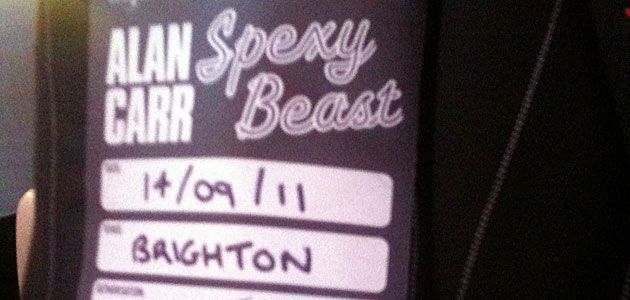
Ellie on the train to Brighton – preparing questions for the Spexy Beast himself!

I also went along to a meeting at Shoreditch House with measurement specialist David Ellis from Station 10 who spoke about Google analytics and techniques to help promote brands online which I found very interesting. It’s clear he inspires many people!

I have to say my highlight of the week was going to interview and film Alan Carr at the Brighton Centre which was so much fun! He is just as lovely in real life, and even funnier! To top it off I got to watch his ‘Spexy Beast’ stand up show which had me in stitches all night.

It has been lovely working with Tayler and Daisy who made me feel very welcome the entire time and I look forward to hopefully working with them in the future! Thank you for the great experience x

The Need for a Digital Strategy

Businesses of all shapes and sizes, from the big players right down to one-man bands seem to feel the ever-mounting pressure of having a digital strategy in place. How to crack the social code, how to market to the masses, or how to simply make friends and collect followers?

At the private view of Hotshoe’s Other last week I was discussing the possibilities of ‘Social’ with a group of commercial photographers. Aidan McCarthy confessed the pressure he was feeling having not yet joined the global conversation and master minded a ‘digital strategy’. What was it that people online wanted from him he asked, how would Tweeting lead to more work?

Photo by Aidan McCarthy

Image by Aidan McCarthy

A few weeks ago The Telegraph had their inaugural Festival of Business in Manchester. An agony aunt panel, made up of representatives from Twitter, Spotify, Facebook and Dell, were on hand to answer questions about digital strategy. The major gripe that many businesses had was how could they push their online presence past a website and a Facebook page. Many businesses had set up Twitter accounts but didn’t know how best to attract more followers. Jessica Verrilli, Twitter’s Head of Business Development, rather honestly pointed out that sometimes it is not always necessary for a business to have a Twitter account or a Facebook page. Creating a notable presence online for your business requires daily dedication for an uncertain gain. When time and resources are limited it is not always possible for a business to maintain consistency online. Verrilli suggested it would be wiser for some businesses to explore new digital advertising opportunities rather than ticking digital boxes for the sake of it or leaving Twitter accounts blank and inactive.

These feelings of social inadequacies that UK businesses confessed to at the Festival should be rather comforting to hear for people like McCarthy. Creatives should also remember that they have access to something many businesses don’t and that is content. Good content is what successful strategies are made of. There are very few established rules when it comes to social networking and this is what can be rather unnerving for many. However, if there is one solid foundation that Social rests upon it is sharing. It is not necessarily what you have to say that gets the conversation going but what you have to share with others.

Tilley Harris is a recent Photojournalism graduate of the LCC

Putting action into words

Have you ever arrived half way though a conversation? One that is in full flow and thriving, those taking part are so engrossed in the discussion that it is hard for them to explain where it all began. You try and catch up with what is being said but you feel self-conscious, like you are eavesdropping on a private conversation. The contributors have already come so far together that perhaps it would be wrong for you to expect to join in now. After all you are not sure what everyone is talking about so what would you say?

Standing on the outskirts of the Twitter phenomenon some months ago this is exactly how I felt. Trawling through the thousands of Tweets on numerous profile pages in an attempt to grasp this global gathering, this ‘Twitterverse’, felt a bit like trying to translate tribal scripture or decode crop circles. Tword’s, retweets, hashtags, DM’s all meant nothing to me. My brain was not used to this diet of 140 characters and I found the plethora of posts hard to understand.

Staring at my own empty Twitter profile I had many ‘chicken or egg’ moments wondering how all these Tweeple started Tweeting in the first place? With no followers how could I begin a conversation with myself? Surely talking to myself is no way to attract friends?

Fortunately I was offered a place on the Brighton Festival Fringe’s marketing team as one of their online Ambassadors. Although at first the title unnerved me, I was reassured by the Liberty842 team that they would be at hand to guide, advise and untangle any Twitter lingo that gets me in a twist.

Over the months that have passed I have been working on a number of Twitter accounts, not just for the Fringe but for also for Carousel (see my previous post) and just recently the penny dropped.

Twitter has an incredible pace and energy to it and seems to be rapidly evolving into a culture of its own. Now that my brain’s digestive system has become more accustomed to the 140 character format, it suddenly makes perfect sense. Everyone is packaging their information in the same sized envelopes, which makes the exchanges easier to manage and absorb.

Twitter’s most endearing quality however is the support system it provides. Far from being the closed off, secret club that I thought it was, it encourages its members to come together because of shared interests and beliefs and build communities and tribes around areas of common concerns and passions.

Splitting my working week between Brighton Festival Fringe, Carousel and Liberty842 would be a lot more challenging if it wasn’t for Twitter. Three completely different organisations can come together and show support for each other by following each other’s projects and encouraging other like-minded people to follow and support them too.

The system of ‘following’ is what sets Twitter apart from other social media platforms, and reinforces the feeling of movement that you get from being on Twitter. Whether you are living under a strict political regime, have a physical disability and face mobility issues, or you’re just simply unknown, independent and just starting out – there is very little that will exclude you from finding friends on Twitter and leading them towards action and change.

The photo is from the Carousel event at the Blue Camel Club in Brighton.

“The revolution will be tweeted… the revolution will be live”

In September last year Liberty842 took me board – a fresh-faced graduate from the London College of Communications. Tucked comfortably under Liberty842’s award winning wings I was introduced to the intricate online fabric that binds social and media together.

I recently won a place on Vodaphone’s World of Difference scheme. 11,000 people registered for the scheme and I was one of the lucky 500 awarded a grant to work for the charity of my choice for two months. The short essay that I entered as part of the application process was a passionate strategy that aimed to translate much of the social media training I had gained through working with Liberty842 and channel it into the charity’s own social media platforms and push forth their presence online.

My chosen charity, Carousel, facilitate people with learning disabilities to reach their potential through the arts and media. They also run the award-winning Oska Bright Film Festival, the world’s first film festival that is run by and for people with learning disabilities. The festival has already achieved international status touring Australia, Canada and Czech Republic. I was attracted to Carousels approach to the people that they work with, offering them recognition and support, rather than help. The possibilities that social networking and sharing of content present could make a considerable difference to an organization such as Carousel. I chose Carousel because I believe that sharing with them what I have learnt from Liberty842 would be a valuable experience.

On Monday 28th of February I traveled to Birmingham where all 500 winners of Vodaphone’s World of Difference scheme gathered in the Custard Factory (housed in Birmingham’s Arts and Media Quarter) to be congratulated by its directors and advocates. One of the brightest smiles that day was worn by one of Liberty842’s illustrious clients, fashion guru Gok Wan, an advocate and active promoter of the scheme. Both he and the speakers did a fantastic job of emphasizing the opportunities that all the winners had to make a difference. It felt encouraging to see a face familiar with the very company that had given me the confidence to go forward for the position at Carousel. Just like the medium it represents, Liberty842 appeared to be everywhere.

During the day the winners were lead off in groups, given phones and a crash course in tweeting and blogging about their experiences and achievements during their placements. The important role that social media would play through out the scheme was unveiled – the message was clear, World of Difference winners had the power to spread good will on a national scale, inspire others and encourage social change and mobilization.

The power of social media to drive campaigns faster and further is what seems to fill so many now with confidence and hope. If people want to make a difference they needn’t feel they have to walk alone towards change. The true magic of social media seems to be the feeling of united-ness that sits at the ends of finger tips everywhere. Communities can unite with other communities, charities with other charities, big brands with individuals to exchange messages of aspirations, achievements and criticisms on a level playing field. This was the feeling at the Custard Factory on that day, it buzzed through out the building and ignited the energy amongst Vodaphone’s new team of difference makers. The revolution is here. The revolution will be tweeted.

Connecting the dots

On Monday 31st of January the Libery842 team attended a seminar held at the RSA. The seminar was set up to discuss new approaches to community regeneration. Attendees came from a variety of professional backgrounds to discuss how we can rebuild social networks, both on and offline. The hope is that by doing so we can reach out to the edges of society and empower the most isolated. It was quite a task to be set at 8.30 on a Monday morning, however, fueled heavily on coffee and croissants, we rolled up our sleeves and got stuck in.

Around the large tables sat a broad spectrum of experiences. Each group was given marker pens, post-it notes and A3 sheets of paper and asked to throw around ideas on developing and rebuilding relationships within a community. We rummaged through our personal toolboxes of experience and attempted to tackle this mammoth task.

Language, we all agreed is key to connecting people and since this was the case we needed to decide on easily accessible vocabulary and terminology. (It was felt that the term ‘mental heath’, for example, was far too broad and could stigmatise people – and that using more specific terms would have more relevance). It was also pointed out that language used needs to adapt to reach each community with their own set of terms and definitions.

One of the project’s aims is “to inform the policies and practices required to power and sustain the Big Society”. However it was thought that the true definition of the Big Society was not clear and therefore it was key to explore exactly what it means and how public services might be affected by any changes (as there are many isolated members of society that depend upon them). The Connected Communities initiative is trying to avoid a top-down approach to the issues they intend to tackle. As the speakers Professor David Morris and Steve Broome explained, The Connected Communities report calls for innovative solutions to local problems and local collaboration to enhance mental well-being for all. They also discussed the role of public services and if those roles can be strengthened, redefined or even reduced if better social networks are put in place.

One attendee suggested that perhaps the caring professions had a lot to “un-learn” when it came to interacting with patients. He put forward the idea that professionalism had taken over and value systems were being imposed upon communities that never really belonged to them in the first place. Public services were seen as somewhat to blame here, at times, treating the people that needed individual support more like boxes that needed to be ticked. The term “un-learning” was adopted quickly by the seminars attendees, becoming it seemed, the first addition to the group’s glossary of shared language.

Over the years, technology has fundamentally changed the way we do business – in the way we connect, communicate and build relationships. We discussed how digital solutions could be applied to help those that are most isolated within society. Although there are still many corners that the World Wide Web does not reach, it was thought that by using technology that people do have (like mobile phones, which have 130% penetration in Western Europe) would be a good place to start.

It seems as though there are still many things we must “un-learn”, many ticked boxes to reassess. However by using language that people understand, and technology that does not require new learning and is already accessible, then perhaps we could start to join those first few disconnected dots.