Twitter, The Archers and a happy ending

Tayler CresswellA short story about the power of Twitter, how it enables a speedy response and a happy ending.

I spotted Dr Black’s tweet not long after it was posted, tweeted her from @BBCTheArchers to say that we were looking into her problem, and alerted The Archers team. Meanwhile, Dr Black had managed to find someone who put her in touch with The Archers office. Twitter at its best.

Storify from @JemStone at the Beeb.

By Tayler, 16 January 2013

Alan Carr’s New Year Specstacular tops tweet leaderboard

Alan Carr’s New Year Specstacular topped SecondSync’s New Year’s Eve leaderboard for most tweeted about programme with over 33,000 tweets about the show around broadcast.

According to Broadcastnow.co.uk, “The entertainment extravaganza which featured an array of stars including Jonathan Ross, Jack Whitehall and Gok Wan generated 49% of all the TV-related tweets during the time it was on-air, with 24, 289 unique users sending 233 tweets per minute between them.”

Liberty842’s Sam hosted the Twitter party via @chattyman on the night. The highlight – and the peak on Twitter – was Alan dressing up as Harry Styles! From our management of the @chattyman account, we’ve seen all those One Direction fans stick with the show with many still calling for Alan to take over as the band’s manager!

Alan tweeted a photo of him as Harry which was retweeted over 41,000 times, and Harry Styles’ enthusiastic response – “@AlanCarr Hahaha!! I love it… Happy New Year!” – was retweeted over 40,000 times.

Alan Carr as Harry Styles

Farewell Ceefax

Tayler CresswellThis week sees the end of analogue TV in the UK, and with it goes Ceefax. BBC News Magazine has a delightful video taking us on a trip down memory lane including clips of old BBC idents and continuity announcements “cheesy music and all”…

Looking round YouTube, I also found a news item from 1972 introducing the “new BBC project” from the BBC research centre. The interview includes the question: “We’ve heard a lot from science fiction people about the days when you’ll be able to do your shopping and all your library work at home with television sets at home. Is this the start of that sort of development?”

Posted by Tayler, 24 October 2012

Happy Ada Lovelace Day!

Daisy CresswellIt’s Ada Lovelace Day today and it’s always great to be reminded of heroines that have helped influence and shape the world as we know it. My sister and I started our business in 2009 because we were inquisitive and wanted to create a business that questions established ways of doing things. In just three years we have witnessed, and been part of, the major shift in audience behaviour – particularly when it comes to TV and radio. With tools such as Twitter and Facebook amplifying fan opinion, programme-makers and broadcasters have a unique opportunity to peek into viewers’ and listeners’ homes (offices, bus journeys, dog walks…) and hear their point of view. And it’s not just the digital natives we’re talking about. We can see this shift too in radio listening behaviour for example with the BBC Radio 4’s The Archer’s tweetalongs on a Sunday morning.

We are in the throes of a social (r)evolution. Technology brings us new and enhanced tools, but with them comes responsibility. Those in the industry need to help to shape a new, more responsible, educated social landscape.  It’s up to us to help show people how best to harness this.  We are up for the challenge.

Happy Ada Lovelace Day! (Find out all about Ada on the Science Museum website.)

Posted by: Daisy, 16 October 2012

Picture shows Daisy and Tayler on a beach sometime in the 1970s. Photo taken by our inspirational nan, Gladys Griffin.

Social Media Week: Are you decent?

Shirley Conran OBE

The second of our Social Media Week events took a look at the risks for people and brands when communicating online while also showing some brilliant examples of the positive ways in which young people in particular can make use of digital technology.

Liberty842 co-founder Daisy Cresswell was first to speak, highlighting how social media professionals should take responsibility for ‘educating those less aware’ of the implications of sharing information and opinions online – especially young people. We heard from a couple of teenagers (from the video posted below) about their experiences of using social media, getting a sense of their attitudes to different platforms and finding out about the issues they face – including an example of a potential employer checking one of the girls’ Facebook profiles.

Speaking about how social media etiquette applies to brands, Daisy said that having a plan and clear brief from the start of the project is essential, no matter what the subject area, and that establishing guidelines is necessary to enable successful management of communities and content on the channels you’re using.

Providing an overview of the legal considerations for social media content was Gateley LLP Media Partner Lisa Logan who referred to some of the high-profile cases from the past year – most notably the ASA adjudication on Nike’s Make It Count campaign involving Wayne Rooney and Jack Wilshere – to point out why your plans should always take the law into account. She was joined by Senior Associate at Gateley LLP Sarah Fitzgibbons who summarised the role injunctions play in a digital environment and explained how information and social media accounts themselves can be subject to ownership disputes.

Illustrating the huge opportunities that digital technology offers to future generations, Stimulation Ltd Social Media Strategist Tiffany St James talked about just a few of the innovations inspired and, in some cases, created by young people. These included projects from Young Rewired State – such as ASBOrometer and mobile interfaces for Refugees United – as well as Maily – a drawing-based email app for children. Though the outlook is very positive, she warned us that setting a good example is essential, saying ‘If grown-ups can’t get it right, what hope is there for kids?’

Last speaker of the evening was Think’s Head of Creative Strategy, James Deeley, who promised 10 insights in 10 minutes (or thereabouts) but gave us plenty more than that to go away with. He used Pottermore as an example of how social media projects should work with existing communities and not try to replace them. He also offered some fascinating insights into devices (not just a fourth but a fifth screen!) and audience behaviour, encouraging us to consider how we can work with existing channels and truly engage with fan networks instead of trying to take control of them.

Thanks to everyone who came along to this event and to our ‘The good, the bad and the ugly’ session. Stay in touch with the speakers by following @842Daisy, @Liberty842, @GateleyLLP, @TiffanyStJames and @JJDeeleyThinks.

Social Media Week: The good, the bad and the ugly

Best practice for using social media in TV and radio was the theme for the first of our Social Media Week events, ‘The good, the bad and the ugly’, at Gateley LLP on Monday 24 September.

First up was Simon Poole from Somethin’ Else, producer of Radio 5 Live’s Kermode and Mayo’s Film Review, who spoke about the increasing importance of social networks in enhancing the radio show and keeping momentum going in the days between episodes. He explained how Facebook in particular has become ‘a crucial part of a radio producer’s tool box’, giving him valuable insights into audience demographics and enabling him to tailor the show to listeners’ tastes and even create new features for the weekly podcast and online-only content based on social media feedback.

Picking up where Simon left off, our own Tayler Cresswell talked about the role community plays for two very different, well-loved shows for which Liberty842 manages social media feeds: BBC Radio 4’s The Archers and Channel 4’s Chatty Man. She told guests that engagement goes far beyond simply monitoring feedback and allows media companies to ‘get in among your audience and be part of the conversation’, tackling negative comments while making the most of talent and fan networks to increase awareness, generate excitement and encourage loyalty.

Gateley LLP Media Partner, Lisa Logan, gave an overview of the legal issues that social media producers should be aware of, highlighting some of the most common pitfalls and areas of risk. Citing recent examples where social media posts had become the subject of legal action, she demonstrated the importance of ensuring that advertising, privacy and copyright guidelines are followed.

On hand to help make sense of the huge amount of data available from online activity, Station10’s David Ellis rounded up the session by telling guests that insight is critical to proving the value of social media for brands. If the magical glow of social media has dimmed a little over the past six months, thanks largely to the shaky Facebook IPO, then Ellis believes we should consider it good news and welcome a more rational approach where data is used to maximum effect to understand where effort and expenditure are best placed.

Thanks to everyone who came along to the event. You can stay in touch with the speakers by following @SimonPoole, @Liberty842, @Tayler, @GateleyLLP and @Station10_UK.

Twitter gold for Paralympic athletes

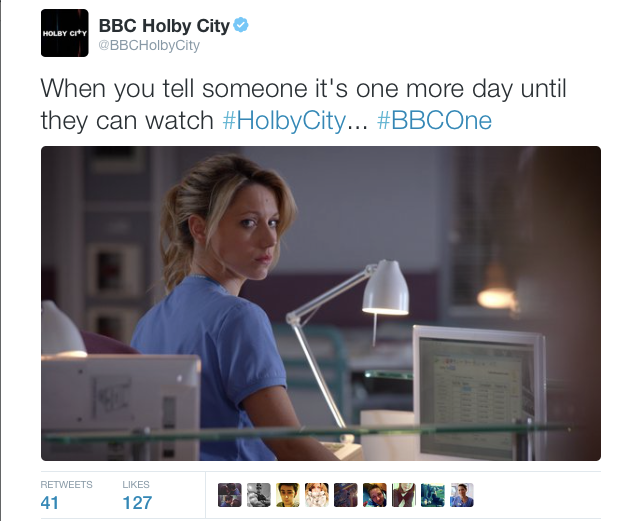
BBC Holby City tweet

It’s over a week into the Paralympic games and it’s drumming up some impressive stats.     Team GB are second to China in the medal table, with 32 gold medals in total, including ten for Athletics alone. You may be familiar with a few of them – Eleanor Simmonds, David Weir, Liz Johnson and Jonnie Peacock are the names currently causing a buzz around the Olympic village. Dive a little deeper into social media and these same athletes are competing for their online presence – and increasingly seeing the benefits.

Paralympic athletes are fast becoming household names and seeing their profiles soar as their successes in the medals table continue to boom. A great measure of this success can be seen on social media. Triple medal winner Ellie Simmonds has seen a boost of 376% in followers on Twitter (up to over 21,000) and 403% on Facebook, to over 18,400 fans since the start of the event. Sarah Storey, also a double gold medallist, set the Velodrome alight this week and has also experienced significant gains online, with a rise of almost 100% in Twitter followers and a whopping 479% increase on Facebook. With more medals up for grabs, her profile is surely set to continue to increase as the week goes on.

The International Paralympic Committee’s social media guidelines for London 2012 actively encourage tweeting and Facebook posts, making it the first truly social Games. Indeed Craig Spence, IPC Media & Communications Senior Manager, said: “The IPC wants to use the power of social media to spread the Paralympic vision and share the Paralympic experience so that anyone anywhere in the world can be part of these Games.” Furthermore, rules for posts include:

  • These must be in the first person, their own personal opinion or views and related to their own personal Paralympic-related experience.
  • They should not contain any interview with, or stories about, other Accredited Persons
  • Postings should be polite, courteous, and respectful in their messages to others and shall not use obscene, profane, vulgar, sexually explicit, defamatory, or abusive language.


Straightforward and self-explanatory maybe but putting these rules in place ensures a level of respect from athletes and the IPC’s proactive dedication to maintain this positive rapport. Perhaps something Twitter itself can learn, its terms and of service essentially stating ‘You are what you Tweet – and we’re not responsible for it’. An active approach to curb negative posts and so-called ‘internet trolls’, through guidelines alone, by the hand that feeds may help to generate a more positive ethos.

Paralympic volunteers are also getting involved in the social media Games, helping to regulate athlete’s tweets from within the media village. I spoke to one helper who details her experience:

“I was assigned to monitor a screen in the Olympic village canteen which ran a live Twitter feed. If athletes posted messages with certain hashtags, for example #proudparalympian, these would come through for me to filter onto the screen. They were encouraged to use this tag, along with any to do with Paralympics London 2012.

“My job was to approve these tweets, allowing them to appear on the screen. I was verbally told what I had to look out for, for example, do not approve tweets if they’re offensive. Some were ambiguous. For example, if a team had lost, I couldn’t tell if the way a reaction was written was classed as ‘offensive’. You can’t always get the tone if it’s just written down. If I was unsure I just didn’t approve it. I also deleted ones that tweeted to loads of people, or contained just a link. A few were also in different languages, so I had to Google translate them prior to approval.

“The most frequent tweets gave thanks to everyone for their support, notified what time their race was starting or stated happiness over a win. Athletes would tweet about winning and losing games but even when they lost they wouldn’t show any bitterness or too much sadness. They would have a positive tone, like ‘chin up’ or ‘we will be back’. I obviously wanted to capture tweets from well-known athletes.

“I think tweets from fans encourage athletes a lot and make a big difference, as I saw so many messages of appreciation coming through. Compared to four years ago in Beijing, social media has made a massive contribution and played quite a big part in the games.”

For tips on the top athletes to follow, see IPC’s social media manager Natalia Dannenberg’s Top 50 Tips on who to Follow at the London 2012 Paralympics.

@Paralympic – Official Twitter page of the International Paralympic Committee (IPC), the global governing body of the Paralympic Movement.

http://www.paralympic.org/

By Emma Rink


Twitter: a positive social media tool for Olympic athletes and fans

Whether they ran, swam or pole vaulted their way through the Olympics, there was one event that every athlete could take part in: tweeting. Forget the journeys thousands of fans made to the games each day – in the end, it was Twitter that brought in the most traffic.

The ‘social media olympics’, as it is now widely known, allowed viewers to access Olympic coverage from the bathroom to the office at the click of a button. A fantastic feat by the BBC, no doubt, as head of coverage Roger Mosey wasn’t shy to point out via his personal Twitter account.

The athletes succeeded in getting on our televisions but with the rise of social media we were equally successful in getting inside their heads and (moreover) whenever either party felt like it. No longer did we have to wait for the breathless post interview by the reporter. Now, we could cut out the middle microphone and instantly access these thoughts ourselves.

Twitter’s unique selling point is its ability for users to connect directly, in ways previously not thought possible. Michael Phelps exchanged tweets with President Barack Obama for example, who tweeted, “Congrats to Michael Phelps for breaking the all-time Olympic medal record. You’ve made your country proud. – bo” Phelps replied, “Thank you Mr. President!! It’s an honor representing the USA.” The ability for fans and athletes to connect in this way gave the games a human, personal touch that encouraged a sincere devotion and will to those competing and a true appreciation for their spectators. Social media became universally social.

And with statistics comes truth: When the U.S. Women’s Gymnastics team won a gold medal, there was a spike of 29,000 tweets per minute, Twitter said. And when U.S. swimmer Michael Phelps achieved a record number of Olympic medals, it prompted some 37,000 tweets per minute. Usain Bolt’s successful defense of his 200m title, his second gold following his 100m victory at the London Olympics, led to so much discussion on Twitter that it set a new record during the Games, with a heady 80,000 tweets per minute flurry during his win. In total, over 15 million fans followed the Olympics on Twitter; with tweet volume 100 times more than that of the Beijing Olympics back in 2008.

Another positive by-product from the ‘Twitter Olympics’ is its generation of thousands of tweets and countless conversations about sport. The NBC Olympics Twitter Tracker counted 383,174 tweets about swimming and 335,881 tweets about gymnastics during the first week of the games, for example.

Athletes have also used Twitter to encourage followers to practise sports and promote their own training regimes. And as the government takes notice and makes a pledge to introduce compulsory competitive sport to the National Curriculum, one must argue the online and offline conversation generated from the Olympics has contributed to this move forward.

The negative side to the Twitter Olympics is well-documented; UK diver Tom Daley received malicious tweets telling him he’d let his late father down, which led to the tweeter’s arrest. Greek triple jumper Voula Papachristou was banned from the Olympic team after tweeting racist comments about African immigrants in Greece. And Australian swimmer Emily Seebohm blamed social media for her failure to take gold in the 100m backstroke.

Twitter has proven just as important for the Olympics as the coverage itself. With the Paralympic Games under way, related online conversation is eagerly anticipated and is sure to expand in diverse and interesting ways. But while there are the obvious pitfalls, we cannot ignore the positives: for athletes and fans, social media and most importantly, sport itself.

By Emma Rink

BBC triumphs in multiplatform coverage of ‘social media’ Olympics

We’ve come a long way since the Ancient Olympics – athletes competed naked, prizes included vats of olive oil and results were inscribed on ancient Papyrus for a handful to read.

Shocking to the modern native – yes (though the olive oil may come in handy at dinner parties) – but even more shocking to the digital native, who now has Olympic access at their fingertips. With the BBC delivering up to 24 simultaneous live streams of coverage across PC, mobile, tablet and connected TV, it’s no wonder the Sport website amassed the biggest audience in its history – the Sunday after the opening ceremony generated 6.1 million unique browsers in the UK and 8.3 million worldwide.

A lesson to be learnt from ‘the first social media Olympics’, says The Guardian’s Emily Bell, is the relationship between media operators and technology is at its best when it is actively trying to give people what they want. Once again, the proof is in the record figures:  1.7m requested for the Olympics opening ceremony on BBC iPlayer on the first weekend, with 925k on Saturday alone (an all-time high). There were also 1.15m downloads for the BBC Sport Olympics app, with 55% of browsers coming from non-desktop devices on the Saturday. And let’s not forget Twitter: the official Olympic site set up live cameras at events, which quickly gathered hundreds of thousands of followers.

These astounding figures show the importance of multi-platforms in reaching widespread audiences. Browsers across each of the online “four screens” have all seen uplift in daily unique browsers of +70% or more since the start of the Games, with 2.3m accessing BBC coverage via mobile browsers in one day. What’s more, the infamous ‘red button’ interactive guide was accessed by 20 million people in the first few days of the event, according to Roger Mosey, the head of Olympics coverage.

Mosey isn’t shy to boast the impressive viewing figures on his personal Twitter account: ‘The Brownlee brothers were watched by a peak audience of 5.6m winning gold and bronze. Surely best ever UK figure for triathlon. #BBC2012’ (8 August), ‘More Monday TV audiences. Athletics peak confirmed 12.0m; Cycling 7.3m; Gymnastics @bethtweddlenews 5.3m; Showjumping gold 2.2m. #BBC2012’ (7 August). He also regularly interacts with his followers and re-tweets messages of appreciation. It is this kind of interaction that makes audiences feel they have a say and can influence media output.

The flipside of all this, writes Emily Bell, is that the relationship between media operators and technology is at its worst when it prevents audiences from getting what they want. American TV network giant NBC had viewers up in arms, offering live streaming only online, to pay-TV customers. NBC has built its Olympic coverage around edited prime-time packages of events that often took place several hours earlier. The fact the network generates most of its revenue via advertising, as opposed to a licence fee, is justified but as Mosey says, ‘We respect what NBC is doing, but the BBC would have been absolutely killed if it had time-shifted the opening ceremonies” .

One person wrote on the TV & Showbiz site ‘Digital Spy’:

“I was in America for the start of the games – it was very bizarre seeing them pretending the opening ceremony wasn’t happening until 7.30pm EST. Not one mention that it was actually delayed coverage, not even a hint of it on TV or newspapers – and whilst the ceremony was actually happening they were showing the usual afternoon chat shows…”

NBC was under further controversy when it persuaded Twitter to suspend The Independent’s Los Angeles correspondent Guy Adam’s account, after he criticised its coverage of the Olympics. Adam’s wrote: “The man responsible for NBC pretending the Olympics haven’t started yet is Gary Zenkel. Tell him what you think!” His tweet then contained the work email address of Mr Zenkel, the President of NBC Olympics.

After Twitter claimed it breached privacy guidelines (which he refuted), Adam’s responded, “Either way, [it’s] quite worrying that NBC, whose parent company is an Olympic sponsor, is apparently trying (and, in this case, succeeding) in shutting down the Twitter accounts of journalists who are critical of their Olympic coverage.”

The fact Adam’s suspension generated thousands of angry messages on Twitter (including those from Jeremy Vine and Piers Morgan) shows you cannot take your audience for granted, or indeed attempt to fool them, in an age where social media is all-pervading. The BBC’s sterling ubiquitous Olympic’s coverage, combined with positive viewer response, is proof of this.

As a user states on Digital Spy (after it was suggested American’s are ambivalent about the games and can avoid knowing results when at work):

“Errrr hey? Must work in a very strange workplace if ‘most people’ don’t care about sport.

Especially a workplace where nobody looks at Facebook, Twitter, news websites, forums, listens to the radio, sees a TV screen, has friends who are interested and might text them results. Avoiding results of sports events is now harder than ever, NBCs strategy belongs in another age.”

By Emma Rink

Liberty842 at #Fuel4

Liberty842 took time out last week to attend Channel 4’s Fuel4 event in Brighton. Daisy was speaking on a panel of the great and the good in social TV. She talked about how @chattyman came about back in 2009 – and how it kick-started our company! She also talked about the issues around social media management, measurement and the value of providing qualitative feedback to programme makers, broadcasters and agencies.

It was a great day with plenty of sunshine, good food, networking opportunties and, of course, fascinating discourse. I loved the goodie bags, each with a complimentary book inside (ranging from The Cluetrain Manifesto to Clay Shirky’s Here Comes Everybody). Channel 4 Online created a Storify of the event: