
BBC triumphs in multiplatform coverage of ‘social media’ Olympics

We’ve come a long way since the Ancient Olympics – athletes competed naked, prizes included vats of olive oil and results were inscribed on ancient Papyrus for a handful to read.

Shocking to the modern native – yes (though the olive oil may come in handy at dinner parties) – but even more shocking to the digital native, who now has Olympic access at their fingertips. With the BBC delivering up to 24 simultaneous live streams of coverage across PC, mobile, tablet and connected TV, it’s no wonder the Sport website amassed the biggest audience in its history – the Sunday after the opening ceremony generated 6.1 million unique browsers in the UK and 8.3 million worldwide.

A lesson to be learnt from ‘the first social media Olympics’, says The Guardian’s Emily Bell, is the relationship between media operators and technology is at its best when it is actively trying to give people what they want. Once again, the proof is in the record figures:  1.7m requested for the Olympics opening ceremony on BBC iPlayer on the first weekend, with 925k on Saturday alone (an all-time high). There were also 1.15m downloads for the BBC Sport Olympics app, with 55% of browsers coming from non-desktop devices on the Saturday. And let’s not forget Twitter: the official Olympic site set up live cameras at events, which quickly gathered hundreds of thousands of followers.

These astounding figures show the importance of multi-platforms in reaching widespread audiences. Browsers across each of the online “four screens” have all seen uplift in daily unique browsers of +70% or more since the start of the Games, with 2.3m accessing BBC coverage via mobile browsers in one day. What’s more, the infamous ‘red button’ interactive guide was accessed by 20 million people in the first few days of the event, according to Roger Mosey, the head of Olympics coverage.

Mosey isn’t shy to boast the impressive viewing figures on his personal Twitter account: ‘The Brownlee brothers were watched by a peak audience of 5.6m winning gold and bronze. Surely best ever UK figure for triathlon. #BBC2012’ (8 August), ‘More Monday TV audiences. Athletics peak confirmed 12.0m; Cycling 7.3m; Gymnastics @bethtweddlenews 5.3m; Showjumping gold 2.2m. #BBC2012’ (7 August). He also regularly interacts with his followers and re-tweets messages of appreciation. It is this kind of interaction that makes audiences feel they have a say and can influence media output.

The flipside of all this, writes Emily Bell, is that the relationship between media operators and technology is at its worst when it prevents audiences from getting what they want. American TV network giant NBC had viewers up in arms, offering live streaming only online, to pay-TV customers. NBC has built its Olympic coverage around edited prime-time packages of events that often took place several hours earlier. The fact the network generates most of its revenue via advertising, as opposed to a licence fee, is justified but as Mosey says, ‘We respect what NBC is doing, but the BBC would have been absolutely killed if it had time-shifted the opening ceremonies” .

One person wrote on the TV & Showbiz site ‘Digital Spy’:

“I was in America for the start of the games – it was very bizarre seeing them pretending the opening ceremony wasn’t happening until 7.30pm EST. Not one mention that it was actually delayed coverage, not even a hint of it on TV or newspapers – and whilst the ceremony was actually happening they were showing the usual afternoon chat shows…”

NBC was under further controversy when it persuaded Twitter to suspend The Independent’s Los Angeles correspondent Guy Adam’s account, after he criticised its coverage of the Olympics. Adam’s wrote: “The man responsible for NBC pretending the Olympics haven’t started yet is Gary Zenkel. Tell him what you think!” His tweet then contained the work email address of Mr Zenkel, the President of NBC Olympics.

After Twitter claimed it breached privacy guidelines (which he refuted), Adam’s responded, “Either way, [it’s] quite worrying that NBC, whose parent company is an Olympic sponsor, is apparently trying (and, in this case, succeeding) in shutting down the Twitter accounts of journalists who are critical of their Olympic coverage.”

The fact Adam’s suspension generated thousands of angry messages on Twitter (including those from Jeremy Vine and Piers Morgan) shows you cannot take your audience for granted, or indeed attempt to fool them, in an age where social media is all-pervading. The BBC’s sterling ubiquitous Olympic’s coverage, combined with positive viewer response, is proof of this.

As a user states on Digital Spy (after it was suggested American’s are ambivalent about the games and can avoid knowing results when at work):

“Errrr hey? Must work in a very strange workplace if ‘most people’ don’t care about sport.

Especially a workplace where nobody looks at Facebook, Twitter, news websites, forums, listens to the radio, sees a TV screen, has friends who are interested and might text them results. Avoiding results of sports events is now harder than ever, NBCs strategy belongs in another age.”

By Emma Rink
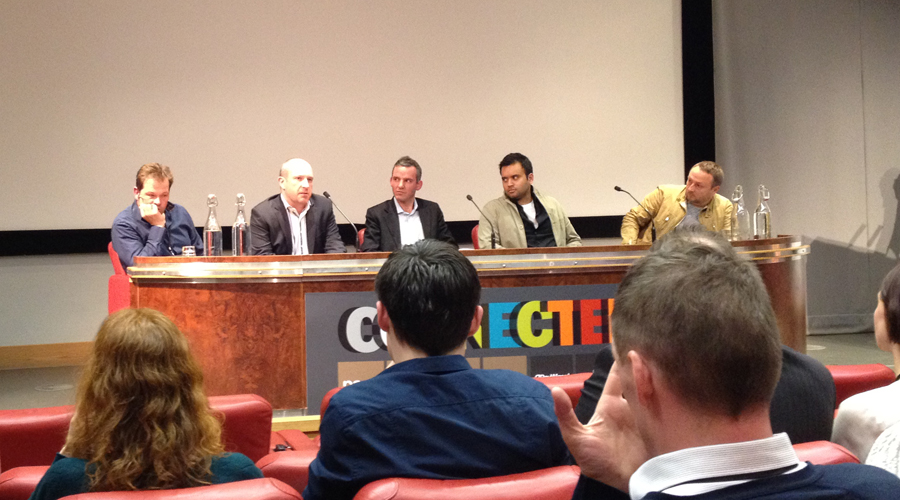
Connected UK event: Creating content worth sharing

Last Tuesday, I went to the first of Pact’s Connected UK events. We heard from Rabin Mukerjea and Andrew Hill, from Grand Central Entertainment @GrandCentralEnt; Martin Trickey @chuffty from TwoFour; Simon Harris, Executive Producer at BBCWW @SJ_Harris and Gareth Capon from BSkyB @garethcapon.

It was a fascinating peek into the crossover between TV, gaming and social content and there was quite a bit of discussion around whether TV programmes are enhanced or interrupted by second screen content and whether, with the rapid rise of content consumed via smart phones and tablets, the TV is fast becoming the second screen.

Here’s the story told in tweets from the night:

Connected UK: Content

Connected UK is a series of five events that brings together leading figures from the worlds of TV, video games, digital media and advertising. Part 1: Content

Storified by LIBERTY842 Ltd · Tue, May 22 2012 06:36:29

Very interesting – a write up of the @IPA_Updates #connecteduk event – ‘Thinking inside the box’ http://infovisionipa.blogspot.co.uk/2012/05/ipaconnecteduk-thinking-inside-box.htmlLizzie Smith
Talk I gave on Tuesday as part of #connecteduk love to hear feedback http://bit.ly/KSES76Simon Harris
Ditto MT @ConnectedUKLND Massive thanks to @nicolamen @garethcapon @GrandCentralEnt @Chuffty @SJ_Harris for great presentations #ConnectedUKLIBERTY842 Ltd
And it’s a wrap – to continue the conversation please use #ConnectedUK. Drinks and nibbles await…ConnectedUK
Rounding up: "Sometimes we forget about putting the consumer at the heart" – @nicolamen. Constant failing of brands IMO. #connectedukMark Hadfield
#connecteduk TwoFour Channel4 Mother & New Look #stylethenation great example of how brands and broadcasters CAN create compelling contentnatalie graeme
For content to go viral it needs authenticity #ConnectedUKConnectedUK
Your audience can smell it when you are trying to market something @chuffty says. So make it funny and don’t try to hard #connectedukTiffany St James
Lots of talk about live experiences w/ 2nd screen, but how can we use past social content as legacy data? Ppl share after too. #connectedukMark Hadfield
Heresy? Q from the floor asks if TV is the second screen – it’s what goes on in the background? #connectedukLIBERTY842 Ltd
Great point by @adamgraham: "The terminology is holding us back. For lots of people the TV is the second screen" #connectedukMark Hadfield
Q & A now with all speakers #ConnectedUKConnectedUK
#connecteduk seems to be implicit assumption that passive consumption = not ideal, and active interaction = better. I love being passive!trev
@garethcapon TV not about "i" its about "we" and "us" #ConnectedUKConnectedUK
"The conversation is transcending national barriers and it is happening in real time" #ConnectedUKSMG London
#connecteduk @garethcapon when everyone can share a moment the true fans are the ones closest to the experience but sharing it with othersnatalie graeme
#connecteduk @garethcapon the conversation around connected content is global and creative content breeds contentMike Dicks
How many times will BSkyB name drop Zeebox? #ConnectedUKMartin Delamere
@garethcapon Content is the thread that holds conversations together #ConnectedUKConnectedUK
@garethcapon It’s content people want to share. Sky invest $2bn per year on content. #connectedukThe IPA
@garethcapon EPL cornerstone of SKy’s success. Brilliant content at heart of that. #ConnectedUKConnectedUK
#connecteduk final speaker is @garethcapon from Sky on fluid live content http://pic.twitter.com/VfImekA2Simon Harris
Shouldn’t we be providing brilliant content to enhance viewers exp rather than maxing #SocialTV for advtsg asks @sj_Harris #connectedukTiffany St James
#connecteduk how about an experience that moves from device to device? – @SJ_HarrisMike Dicks
#connecteduk is transmedia transmediocre at the moment ?@SJ_HarrisMike Dicks
I like the idea of 2nd screen app (vertical or horizontal) being extra layer of relevant content. Make the TV show interactive. #connectedukMark Hadfield
#connecteduk a lot of this second screen panic is TV realising it’s now not always sole focus of attention. Radio got over this decades ago.trev
86% of respondents to Nielsen survey would second screen. I’m one of them, currently first screening during talk at #connectedukAlex Trickett
#ConnectedUK 86% of people use a 2nd screen while watching tvnicola mendelsohn
@SJ_Harris 86% viewers use 2nd screen. 42% tablet 44% phone #ConnectedUKConnectedUK
RT @ConnectedUKLND: @SJ_Harris Investing in brands such as Doctor Who to extend content to 2nd screen #ConnectedUKThe IPA
Simon Harris @SJ_Harris from BBC Worldwide Games explains BBCWW’s strategy for gamers and brands at #connectedukPact
Got to move away from tv being about overnights. Should be about more than the TX slot – so says @chuffty at #connectedukLIBERTY842 Ltd
Good point. If the TV content is aesthetically awesome (Frozen Planet) then 2nd screen is unwelcome distraction. #connectedukMark Hadfield
@Chuffty Million £ drop obviously great example of play along TV show. Antiques Roadshow 2nd screen app on the way! #ConnectedUKConnectedUK
#connecteduk Upstaged for BBC 3 was "the creme de la creme of cock ups" – @Chuffty. Ha!trev
"It’s still just tv, what’s changed is how we watch it". Good session @chuffty w irreverent look at early tech attempts#connectedukSMG London
#comeandhaveagoifyouthinkyouresmartenough – @chuffty on TV cockups. Will tv show names soon be dictated by the hashtag? #connectedukLIBERTY842 Ltd
#connecteduk @Chuffty comparing Draw Something to a game he made for Catchphrase in 2000 (say what you see)trev
"This might be the point where we get to change television" – @chuffty #connectedukMark Hadfield
You can tell @Chuffty used to commission comedy. Loving his talk at #connecteduk about future of telly using black and white slides.trev
Does your tv still have rabbit ears? #connectedukKen Mulligan
Next up @Chuffty- TwoFour’s Martin Trickey on commissing vs producing #connectedukThe IPA
Benefit of familiarity over originality. If it works, do more of it #connecteduk But surely original and intuitive is even betterAlex Trickett
"If it works do more" – but for how many iterations? Until the interest graph/ sharing starts declining? #connectedukMark Hadfield
@GrandCentralEnt Lessons learned: If it works, do more. Benefit of familiarity #connectedukConnectedUK
Talk about a prize! Winner of Nissan GT comp won pro driver contract. Importance of incentive to social content #connecteduk #socialacademyAlex Trickett
GT Academy winner came 2nd at Le Mans 24hr. Amazing PR to change perceptions of the brand to the people who matter. #connectedukMark Hadfield
Rabin Mukerjea and Andrew Hill @grandCentralEnt insights into pulling together games, social media, TV and Le Mans 24hr racing #connectedukPact
"When you dream of racing cars… you don’t think of a [my brand]." What a great problem to try and crack. #connectedukMark Hadfield
@GrandCentralEnt "Fantastic problem" at heart of all good comms ideas #connectedukConnectedUK
@nicolamen: Together we need to build better connections and skills to succeed in converged media landscape #ConnectedUKConnectedUK
#connecteduk @GrandCentralEnt are first up tonight how they got a member of the public into the Le Mans through GT PS3 http://pic.twitter.com/FNyjyfaeSimon Harris
Not an intimidating lecture hall at all 🙂 #connecteduk http://pic.twitter.com/7ZHqtn6cSimon Harris

Social Media Week event: Talking Telly

Social Media Week London

Join us on Wednesday 15th February at 6pm for an evening of Talking Telly. The event is part of Social Media Week London, and we’ll be talking about how the relationship between social and television has become inextricably linked.

Alan Carr: Chatty Man

Talking Telly gives you the opportunity to explore the social telly phenomenon. It looks at the value of the social TV audience, using Alan Carr: Chatty Man as a case study. Hear from Syeda Irtizaali, the show’s Commissioning Editor at Channel 4; Tayler Cresswell from Liberty842, who discusses managing @chattyman; measurement specialist David Ellis from Station 10, who seeks the holy grail of ROI; plus legal expert Lisa Logan from Gateley LLP who will talk about the legal framework and pitfalls involved in social media ownership and control. Plus we’ll be meeting the Chatty Man himself, Alan Carrvia Video Link.

Find out more and book your free place on the Social Media Week website.

The venue is Gateley LLP, Fleet Place House, 2 Fleet Place, Holborn Viaduct, London EC4M 7RF

If you have any questions, send us a tweet @liberty842! We look forward to seeing you there.

Event sponsored by Tangerine Dream – Proud suppliers of thought-provoking cuisine

In association with Pact.

Zeebox & Desperate Scousewives – a new era in interactive TV begins…

Our friends over at Channel 4 have got together with Zeebox to trial the Zeebox app in conjunction with Desperate Scousewives (DSW) on E4. Over the course of the broadcast, users would be fed specially commissioned content and see what cast and viewers were saying about the show as-it-happened.

So last night I settled down to watch, iPad in hand. In a nutshell, it was like Bad Movie Club (which I loved!) on steroids. All the answers to “What’s that track?” Who’s that?” “Where’s that place?” were answered. I could also read reactions to the show from hundreds of programme-related tweets from viewers, participants and the official Scousewives stream.

The app is well designed (not surprising seeing as Anthony “BBC iPlayer” Rose is behind it), and really easy to navigate.

The content feed was nicely timed. During the ad breaks, ‘Zeetags’ popped up on the left, giving viewers the chance to access richer content, namely short videos from the cast. Whilst the generic Zeetags were a bit tenuous (pulling up Wikipedia entries on football and Jesus Christ!), those created specifically for DSW were well produced and included intros to cast members, a handy Scouse glossary and links to iTunes where you could download music from the programme. If you’re that engrossed that you can’t tear your eyes from the telly during broadcast, you can scroll back through the Zeetags in the ad breaks or after the show

I only had a couple of minor niggles using it:

  1. I thought you’d have to leave the app completely to jump to your own Twitter stream – I did manage to access it via related links to the official Scousewives twitter account, but it would be great to have easier access.
  2. The generic Zeetags seem a tad pointless. I know what football is! The real value of this app will be in tailored content around a programme.
  3. I signed in to both Facebook and Twitter with the app, but clicking on the link to join DSW on Facebook, I was prompted to sign in.
  4. Clicking on one of the programmes means I’m showing up as watching it (I wasn’t watching Assault on Precinct 13 last night, if you were wondering, just looking at the page on the app).

All in all, I really liked Zeebox, for the same reason I love Twitter. It’s instant and a really simple set up. Desperate Scousewives isn’t my cup of tea, so I’m not sure I’ll be watching again, but I liked the addition of the app with its tailored content. I think it could be used for more serious programming (thinking back to my blog post about Channel 4’s The Promise back in April).

Incidentally, it’s a great way to access TV listings – and I think one of its big selling points will be that (once more of my friends are using it) I may be swayed by their viewing choices and joining a conversation online with them. It’s an extension of audience behaviour which is why it should work long term.

The history of my own experience as a viewer/listener goes like this…

  • If the phone rang straight after The Archers or Coronation Street, I’d know it was my mum calling to talk about the programme.
  • I sometimes spend a lot of time during a programme texting– one to one – with friends and family talking about a programme we’re watching on TV.
  • The Bad movie club experience – It’s only happened the once, but I watched in awe as a torrent of tweets about The Happening whizzed across my screen in Tweet Chat
  • Twitter interaction between friends and family has more recently extended to a wider network, for example an enjoyable late night discussion with people I’ve only “met” on Twitter about Ian Dury during a programme about him on TV – everyone else in my house had gone to bed!

The big difference with a conversation online is that broadcasters and programme makers can listen in to our conversations and get to know us a little better. They can also use this knowledge to inform future programming.

Congrats to Jodie Morris and her team at Channel 4!

Further info:

Channel 4 press release
Desperate Scousewives on Zeebox

Getting to grips with history through telly and Twitter

I’ve been meaning to write something about Channel 4’s The Promise since it was broadcast in February. Notwithstanding that I thought it was a fantastic, well made, well acted television programme, the added layer of discussion that was encouraged around it made for a really compelling watch.

Viewers were encouraged on air to use the #c4thepromise hashtag on Twitter and as questions began to build in my head about the background to the story – the history of Israel, Palestine, Gaza; Britain’s role in partition of Palestine; the bombing of the King David hotel in 1946… – I turned to Twitter to find others talking about all these subjects. This is a great example of interesting and new(ish) behaviour on Twitter – there are conversations springing up between people who aren’t following each other, but are following a specific hashtag. (Similar activity can be seen around #thearchers hashtag every Sunday morning when The Archers omnibus is broadcast.)

After the first and last episodes of The Promise aired, Channel 4 used live blogging software, Cover It Live, to host a Q&A; with writer and director Peter Kosminsky. This gave viewers the chance to ask questions about the programme, and also gave Kominsky the opportunity to address criticisms of the show: namely whether the programme had a pro-Palestine bias – to which he responded: “If criticism of Israel becomes entirely synonymous with anti-Semitism it becomes almost impossible to attempt any kind of reasoned analysis of what is clearly one of the saddest and most intractable conflicts facing the human race today.”

The live Q&A; sessions and The Promise’s “Twitter Tracker” represent a great archive of the conversations and thoughts of viewers. It’s a valuable resource not just for broadcasters and programme makers, but also for those watching later (ie via DVD) or interested in accessible discussions around the history behind the programme.

Talking about TV’s future


TV’s always going to be worth talking about – as we found out when we heard the findings from Thinkbox’s research into the future of telly this week.

We’ve managed the Twitter feed for Alan Carr: Chatty Man since the Channel 4 series started in 2009 so we know how much conversation a TV show can generate. However, we also know that viewer behaviour is constantly evolving so we were keen to hear about what lies ahead for TV – and that’s exactly what Thinkbox told us.

Tellyporting: Travelling to TV’s Near Future looked at how British audiences are making use of latest technology and how new services might affect – and enhance – their viewing experience.

The great news is that the research found plenty to be positive about.

For instance, the TV still seems to be the preferred device for watching full-length shows where picture and audio can be experienced at their best. It also tends to be the device that people watch with family and friends.

TV’s power to inspire conversation is as strong as it’s always been, though, of course, there are now many more places than just the water cooler for people to catch up with others about what they’re watching.

Of the 3,000 interviewees in Thinkbox’s sample, 19% had shared TV or ad content on Facebook or Twitter, 18% had chatted online and 9% had joined a Facebook group about TV or ad content.

Rather than distracting viewers from what’s happening on telly, this two-screen viewing is adding to the experience of watching a show – and in many cases is encouraging audiences to watch programmes as they air so they can see them as they happen and be part of the resulting conversation.

With 37% of the sample saying they watch the TV and go online simultaneously every day, there’s huge potential to engage these people with additional content and services without losing them along the way.

Future developments in instant-response technology through the TV can only build on this, enabling broadcasters, programme makers and advertisers to connect with audiences while listening to and learning from what they have to say.

Which technologies lead the way remains to be seen so the only thing we can be sure of at this stage is that the TV’s here to stay – and it’ll continue to be a talking point for many years to come.